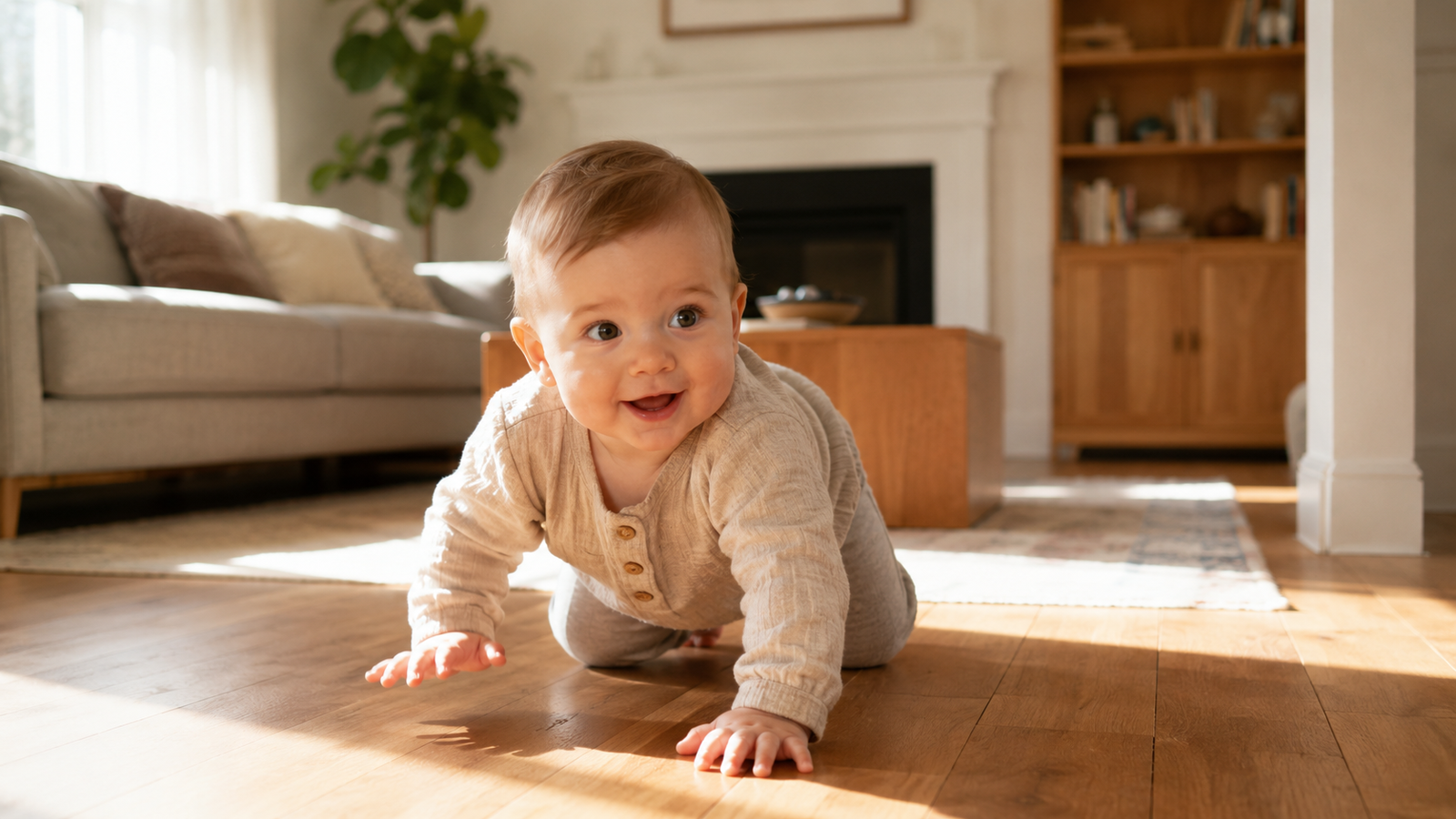
A calm first pass at babyproofing room by room begins with getting down onto your hands and knees to see hazards from an infant perspective. First, anchor heavy furniture like dressers and televisions to wall studs. Next, install hardware-mounted safety gates at the top and bottom of staircases. Finally, secure electrical outlets and lock low cabinets containing chemicals, medicines, and small choking hazards.
Watching your baby learn to roll and push up on their hands is an exciting developmental milestone. However, the realization that your infant will soon crawl across the entire house often triggers immediate anxiety. Many parents walk into a baby store, see hundreds of safety gadgets, and feel completely overwhelmed.
Fortunately, you do not need to wrap your entire house in foam overnight. Taking a structured approach to babyproofing room by room helps you address high-risk hazards first while ignoring minor inconveniences until your baby actually needs them.
Why a Phased Safety Approach Beats Total Overwhelm
Many first-time parents make the mistake of attempting to babyproof the entire house in a single weekend. Consequently, they spend hundreds of dollars on drawer latches that an infant cannot even reach yet.
Babies develop gross motor skills in predictable stages:
- 4 to 6 Months: Rolling over and exploring objects with their mouths.
- 7 to 10 Months: Army crawling, hands-and-knees crawling, and opening low drawers.
- 10 to 14 Months: Pulling up on furniture, cruising along tables, and reaching countertops.
Therefore, your first pass should focus strictly on life-threatening hazards: tip-overs, falls, choking objects, and poisons. You can add minor convenience latches later as your baby grows taller.
The 4 Core Rooms to Prioritize in Your First Pass
Focus your attention on the primary spaces where your baby spends the most daytime and nighttime hours.
1. The Living Room Safety Audit
Because families spend the majority of their active hours in the living room, this space requires the most rigorous physical protection.
Anchor Heavy Furniture to Wall Studs
According to the Consumer Product Safety Commission (CPSC), furniture and TV tip-overs cause thousands of severe pediatric emergency visits every year. When a toddler pulls out lower drawers to climb, the center of gravity shifts forward instantly.
Anchor all bookcases, television media consoles, and tall dressers directly to wall studs using heavy-duty anti-tip straps or solid metal brackets. Never rely on drywall anchors alone.
Manage Electrical Cords and Low Outlets
Curious infants naturally pull on dangling cables. Tuck floor lamp cords and television wires inside wall-mounted cord covers. In addition, replace basic push-in plastic outlet caps with sliding safety outlet plates, which snap shut automatically when a plug is removed.
Cushion Sharp Coffee Table Edges
When babies learn to pull themselves up, falling against sharp glass or wooden table edges can cause facial lacerations. Apply soft silicone edge protectors to low coffee tables, or replace hard coffee tables with a soft padded storage ottoman.
2. The Nursery and Sleep Area Precautions
Your baby will spend hours unsupervised in their nursery while sleeping. Therefore, this room must be secure even in complete darkness.
Keep the Crib Zone Completely Clear
Position the crib at least three feet away from all windows, floor lamps, wall art, and drapery cords. A standing toddler can easily reach through crib slats and pull hanging window cords, creating an extreme strangulation hazard.
Secure Baby Monitor Cords
Federal safety standards warn that infant monitor cords must be mounted at least three feet away from the edge of the crib. Never drape camera cords over the crib rail. Use rigid cord covers screwed into the wall to keep power cables completely out of reach.
3. The Kitchen and Dining Hazards
The kitchen is full of heat, heavy cookware, and cleaning chemicals. Managing this room requires creating clear physical boundaries.
Lock Toxic Chemical Cabinets
Under-sink cabinets typically contain dishwasher pods, bleach, and cleaning sprays. Ingesting these concentrated chemicals can be fatal.
Install magnetic cabinet locks or heavy-duty internal latches on every single floor-level cabinet. Move high-risk items like laundry pods and drain cleaners to high overhead shelves for added protection.
Install Stove Knob Covers and Handle Rules
Toddlers love to reach up and twist stove dials. Install clear plastic stove knob covers to prevent accidental gas leaks or burner activation. In addition, always turn pot handles inward toward the back of the stove while cooking.
4. The Bathroom and Water Safety
Water presents an immediate drowning hazard for infants, who can drown silently in as little as two inches of standing water.
Install Toilet Lid Locks
Curious babies lean over toilet bowls to splash in the water and can easily fall headfirst due to their heavy top-heavy body proportions. Install a simple one-handed toilet lid lock to keep lids securely shut.
Lower Your Water Heater Thermostat
Infant skin is significantly thinner than adult skin and scalds in seconds. Set your home water heater thermostat to a maximum of 120°F (49°C) to prevent accidental scalding if a hot water faucet is turned on.
Priority 1 Hazards vs Priority 2 Enhancements
| Area of Concern | Priority 1: Do Before Crawling | Priority 2: Do When Walking |
| Furniture & TV | Anchor heavy dressers, bookcases, and TVs | Add soft drawer stoppers to light drawers |
| Stairs & Steps | Hardware-mounted gate at top of stairs | Pressure-mounted gate at hallway doors |
| Toxic Substances | Lock cleaning chemicals and all medications | Lock pantry snack drawers |
| Windows & Cords | Cut dangling blind cords; move cribs 3ft away | Install window sash stop locks |
| Water Safety | Install toilet lock; test water heater temperature | Add non-slip silicone bath mats |
The Hands-and-Knees Floor Crawl Test
Once you complete your initial safety audit, perform the ultimate diagnostic test: get down on your hands and knees and crawl through each room.
Seeing the room from a baby’s eye level reveals hidden dangers that standing adults miss:
- Dropped coins, loose paper clips, or button batteries under the sofa.
- Exposed electrical cords behind the living room chair.
- Pet food bowls with choking-sized dry kibble.
- Loose heating vent covers on the floor.
Maintaining a Safe Home as Your Child Grows
Babyproofing is not a one-time event, but an ongoing process that evolves alongside your child’s physical development.
By systematically tackling this babyproofing room by room checklist, you establish a secure environment where your little one can explore freely. Take pride in creating a safe haven, and enjoy watching your baby discover the world with curiosity and joy.
FREQUENTLY ASKED QUESTIONS
When should I start babyproofing my house?
You should begin your first babyproofing pass when your baby reaches four to six months of age, before they begin rolling and crawling actively. Installing safety gates and anchoring heavy furniture early prevents emergency scrambles once your infant suddenly becomes mobile.
What is the most critical babyproofing step of all?
Anchoring heavy dressers, bookcases, and televisions to wall studs is the most critical step. Furniture tip-overs cause severe, life-threatening crush injuries that cannot be prevented by parental supervision alone.
Are magnetic cabinet locks better than spring latches?
Magnetic locks are generally superior because they remain completely invisible on the outside of cabinetry and prevent the door from opening even a crack. In contrast, standard plastic spring latches allow the drawer to open an inch or two, which can pinch tiny fingers.
What type of safety gate should I use at the top of stairs?
Always use a hardware-mounted safety gate screwed directly into wall studs at the top of stairs. Never use a pressure-mounted gate at the top of a staircase, because a child leaning their full body weight against it can dislodge the gate and cause a fall.