The clearest signs baby is ready for solids include sitting upright with minimal support, holding their head steady, showing active interest in your food, and losing the tongue-thrust reflex. According to the American Academy of Pediatrics (AAP), most infants reach these developmental milestones around six months of age. Starting solids before four months can increase choking risks and digestive upset.
Deciding when to introduce solid foods is an exciting milestone for new parents. However, conflicting advice from well-meaning relatives often creates confusion. For example, some people suggest adding cereal to a bottle, while others insist on waiting longer.
Fortunately, your baby’s physical development provides the most accurate timeline. Learning to spot true developmental readiness ensures a safe and positive transition to food.
Why 6 Months Is the Recommended Starting Age
Major health organizations, including the American Academy of Pediatrics (AAP) and the World Health Organization (WHO), recommend waiting until around six months to start solids.
Before this age, an infant’s digestive system remains immature. In addition, their kidneys are still adapting to processing concentrated nutrients. Introducing solid foods too early can increase the risk of digestive discomfort and accidental aspiration.
Furthermore, breast milk or infant formula provides all the necessary nutrition and hydration a baby needs for the first six months of life.
4 Developmental Signs Baby Is Ready for Solids
You should always evaluate physical development rather than relying solely on the calendar. Look for these four key signs baby is ready for solids:
Sign 1: Good Head and Neck Control
   │
   ▼
Sign 2: Sitting Upright with Minimal Support
   │
   ▼
Sign 3: Loss of the Extrusion (Tongue-Thrust) Reflex
   │
   ▼
Sign 4: Grasping Objects and Active Food Curiosity
1. Steady Head and Neck Control
Your baby must hold their head upright and steady without wobbling. Good head control is essential for safe swallowing. If an infant slouches or tilts their head downward, the risk of choking increases significantly.
2. Sitting Upright with Minimal Support
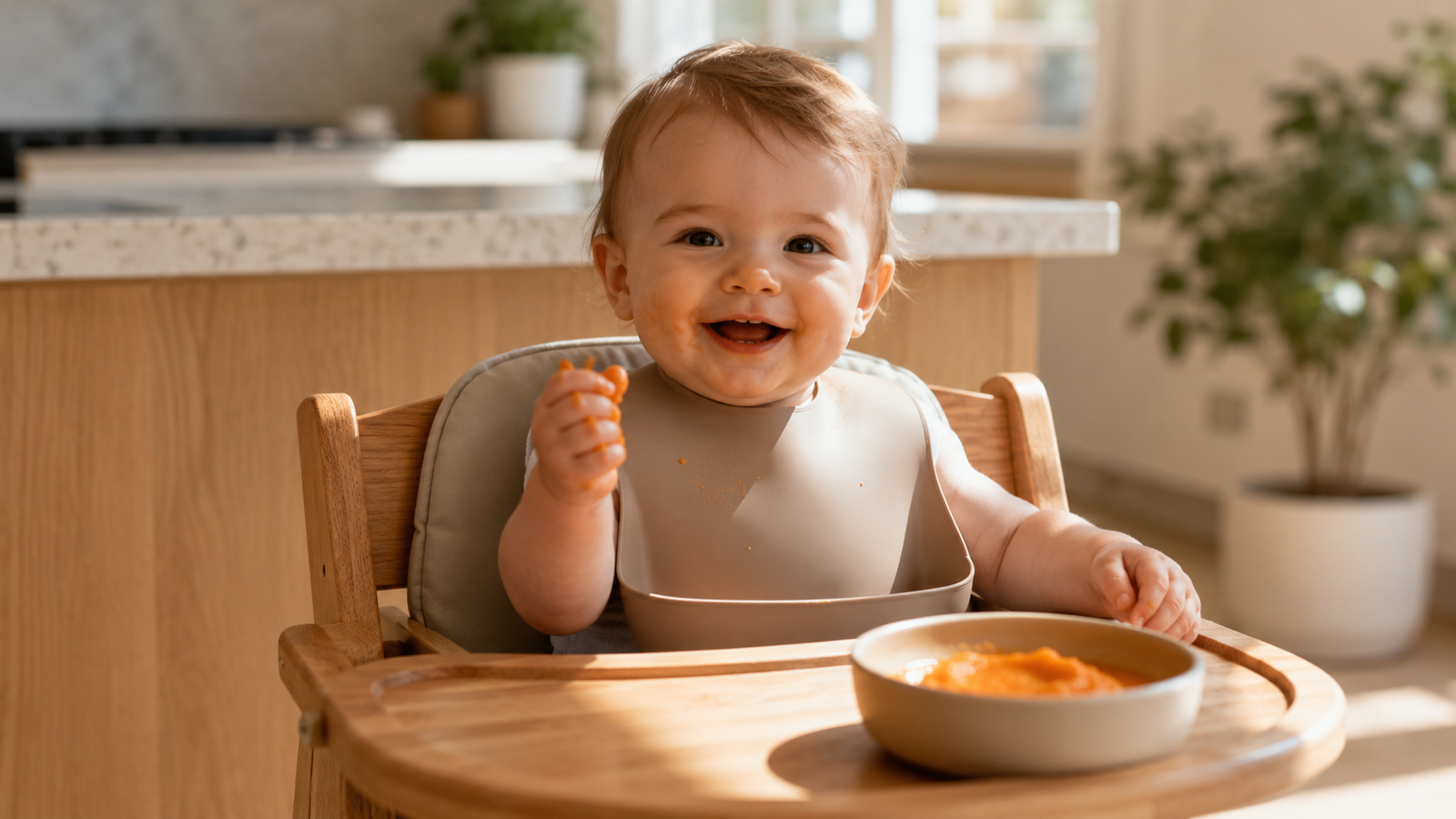
Your baby should be able to sit relatively upright in a high chair without slumping over to the sides. While they do not need to sit completely unassisted on the floor, they must maintain a stable trunk position when seated in a supportive high chair.
3. Diminished Tongue-Thrust Reflex
Young infants naturally push unfamiliar objects out of their mouths with their tongues. This involuntary reflex protects them from choking during the newborn stage. However, to swallow purees or soft foods successfully, your baby must lose this tongue-thrust reflex and move food to the back of their throat.
4. Coordinated Grasp and Food Curiosity
Babies ready for solids often watch you eat intently. For example, they may lean forward, open their mouths when food approaches, and reach for items on your plate. In addition, they should demonstrate the ability to bring toys or their own hands directly to their mouth.
False Readiness Signs That Confuse Parents
Many normal infant behaviors are often mistaken for hunger for solid food. However, these signs alone do not mean your baby is developmentally ready.
| Behavior | Common Misconception | Actual Developmental Reason |
| Waking up at night | Baby needs solid food to sleep | Normal sleep regression or developmental growth spurt |
| Chewing on hands | Baby is hungry for real food | Exploratory oral phase and natural teething behavior |
| Watching parents eat | Baby is craving adult food | Social curiosity and interest in parent activities |
| Reaching a weight milestone | Hitting 15 lbs means instant readiness | Weight does not equal neuromuscular swallowing maturity |
How to Prepare for the First Feeding
Once your baby displays all the necessary physical milestones, you can introduce first foods calmly.
Pick the Right Time of Day
Choose a time when your baby is alert, happy, and not overly hungry. For instance, offer a feeding session about thirty to forty-five minutes after a regular breast milk or formula feed. Because your baby is not frantically hungry, they will explore new textures with patience.
Choose Nutrient-Dense First Foods
Single-ingredient purees, mashed foods, and soft finger foods all work well for beginners. Iron is a crucial nutrient at six months because natural infant iron stores begin to decrease.
Therefore, consider these nutritious initial options:
- Pureed or finely shredded meats (such as chicken or beef).
- Iron-fortified single-grain infant cereals mixed with breast milk or formula.
- Mashed avocado or sweet potato.
- Mashed cooked lentils or beans.
Maintain a Safe High Chair Setup
Always secure your baby in an upright high chair with the safety harness fastened. Ensure the chair has a solid footrest. Having firm foot support stabilizes the baby’s core and promotes safer swallowing mechanics.
When to Contact Your Pediatrician
Most infants transition smoothly to solid foods. However, you should consult your pediatrician if you notice any of the following concerns:
- Your baby cannot hold their head steady by six months of age.
- Your infant gags severely or turns blue during feeding attempts.
- You observe signs of an allergic reaction, such as hives, facial swelling, or repeated vomiting after eating.
- Your baby consistently refuses all food textures past seven or eight months.
Key Takeaways
- Wait for physical milestones: Look for steady head control, upright sitting, and the loss of the tongue-thrust reflex.
- Aim for around six months: Health organizations agree that six months is the safest and most nutritionally appropriate starting window.
- Do not rush night waking: Night waking is developmental and does not mean a four-month-old needs cereal.
- Prioritize iron-rich foods: Choose iron-fortified cereals, mashed legumes, and pureed meats to replenish infant iron stores.
- Keep high chair positioning upright: Proper posture and a solid footrest significantly reduce the risk of choking.
Community
What was the very first food your baby tasted, and how did they react to the new texture? Share your starting solids stories and favorite starter recipes in the BabyCareGuide Community.
Save
Starting solid foods is a multi-week learning process. Bookmark this milestone guide on your phone so you can double-check the readiness checklist before offering your baby their first high chair meal.
Share
Know a parent with a four-to-six-month-old baby? Share this pediatrician-aligned readiness guide to help them spot the right developmental milestones.