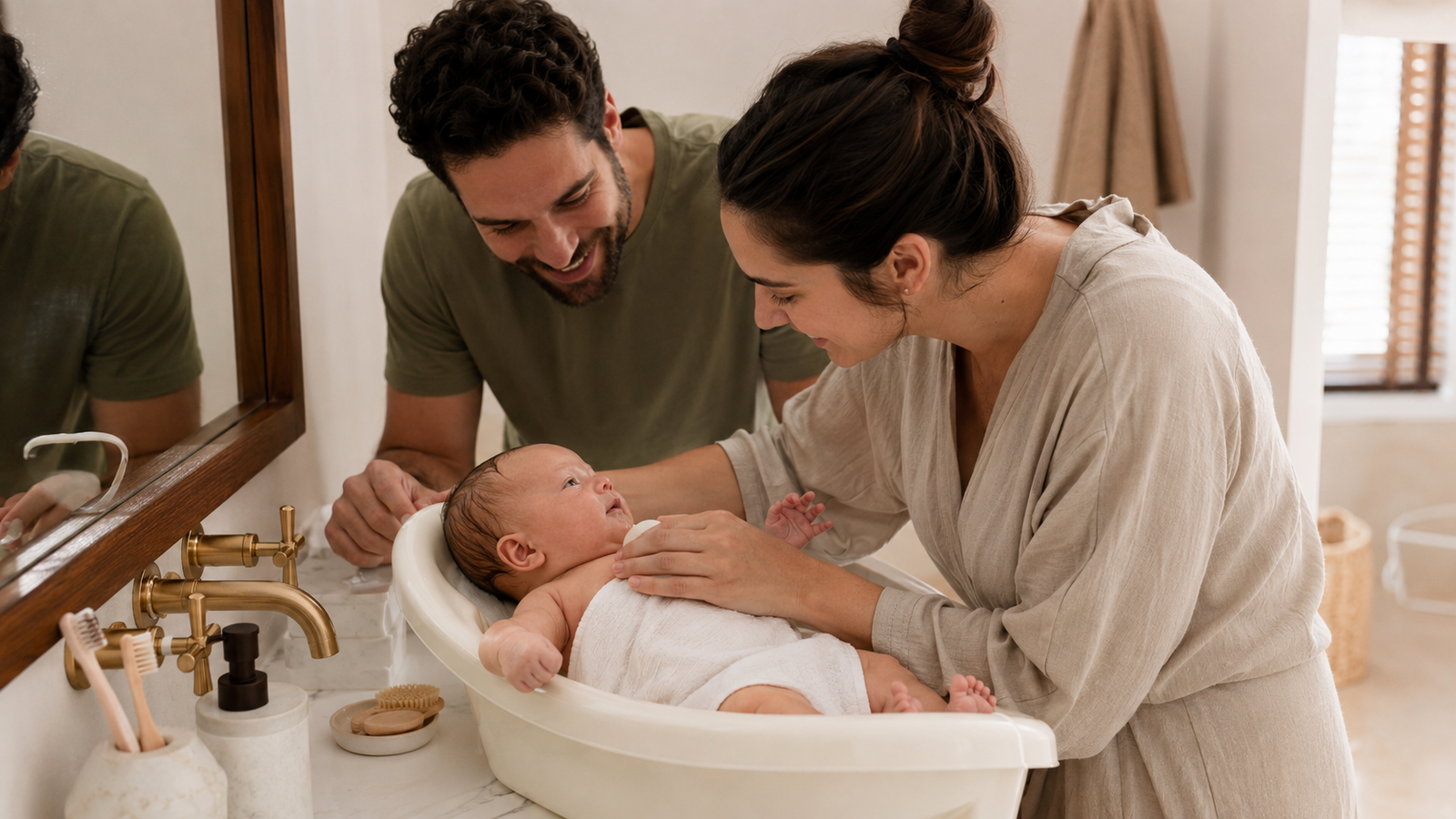
A safe baby bath routine for first time parents starts with preparation and warm room temperatures. First, gather all supplies before touching the water so your hands never leave your baby. Next, verify that the bath water is lukewarm (between 98.6°F and 100°F / 37°C to 38°C). Finally, use sponge baths until the umbilical cord stump falls off naturally, keeping wash sessions under ten minutes to prevent infant chills.
Giving your newborn their very first bath can feel intimidating. Because wet infants are notoriously slippery, many first-time parents worry about dropping their baby or getting water in their eyes and ears. In addition, babies frequently cry when exposed to sudden temperature changes.
Fortunately, bathing does not have to be a stressful ordeal. Adopting a structured baby bath routine for first time parents builds your confidence while turning bath time into a soothing bonding ritual.
Why Newborns Do Not Need Daily Baths
Many parents assume babies require a full bath every single night. However, newborn skin is extremely thin and delicate.
According to the American Academy of Pediatrics (AAP), bathing an infant two to three times per week is plenty. Because newborns do not sweat heavily or play outside, daily soap baths strip natural protective oils from their skin.
Consequently, frequent bathing can lead to dry patches and flare-ups of baby eczema. Between bath days, simply wipe their neck folds, face, and diaper area with a warm, damp washcloth.
The Golden Rule: Sponge Baths First
Before you place your baby in an infant tub, check the umbilical cord stump. Submerging the stump in standing water increases the risk of bacterial infection and delays natural separation.
- Until the cord falls off (Weeks 1 to 3): Stick exclusively to gentle sponge baths on a flat, towel-lined surface.
- After the cord falls off and heals: Transition to an infant tub or sink insert with two to three inches of warm water.
- If your baby was circumcised: Follow your pediatrician’s specific wound care guidelines before full water immersion.
The 5-Step Calm Baby Bath Routine
Following a predictable order ensures a quick, warm, and tear-free wash.
1. Set Up the Complete Prep Station First
Never begin a bath until every item is within arm’s reach. Once your baby is in the water, you cannot step away for a forgotten towel.
Lay out a warm hooded towel, two soft washcloths, fragrance-free baby wash, a clean diaper, diaper rash cream, and a sleeper. In addition, ensure the room is warm and free from drafts.
2. Clean the Face and Eyes With Plain Water
Always start with the cleanest part of your baby. Dip a clean washcloth or cotton round into warm, plain water without soap.
Gently wipe from the inner corner of one eye to the outer corner. Use a separate clean section of the cloth for the other eye to prevent spreading bacteria. Next, gently wash around their mouth, chin, and behind their ears.
3. Cleanse the Body and Deep Skin Creases
Using a dime-sized drop of hypoallergenic baby wash, lather your washcloth. Support your baby’s head and neck firmly with your non-dominant arm.
Pay special attention to hidden skin folds where milk dribble and lint accumulate:
- Under the chin and neck creases.
- Inside armpits and behind knees.
- Between tiny fingers and toes.
4. Wash the Diaper Area and Hair Last
Clean the diaper area toward the end of the bath so the wash water stays clean. Always wipe from front to back to avoid urinary tract infections.
Save washing the head for the very end. Because infants lose heat rapidly through their scalp, washing hair last keeps them warm and prevents shivering.
5. Pat Dry and Lock in Moisture
Lift your baby carefully with both hands and place them directly into your waiting hooded towel. Wrap them up immediately.
Pat the skin dry gently instead of rubbing. Furthermore, apply a ceramide-rich baby lotion or ointment while the skin remains slightly damp to seal in hydration.